





Autumn Budget 2025: A tax hike that redefines wealth for a decade
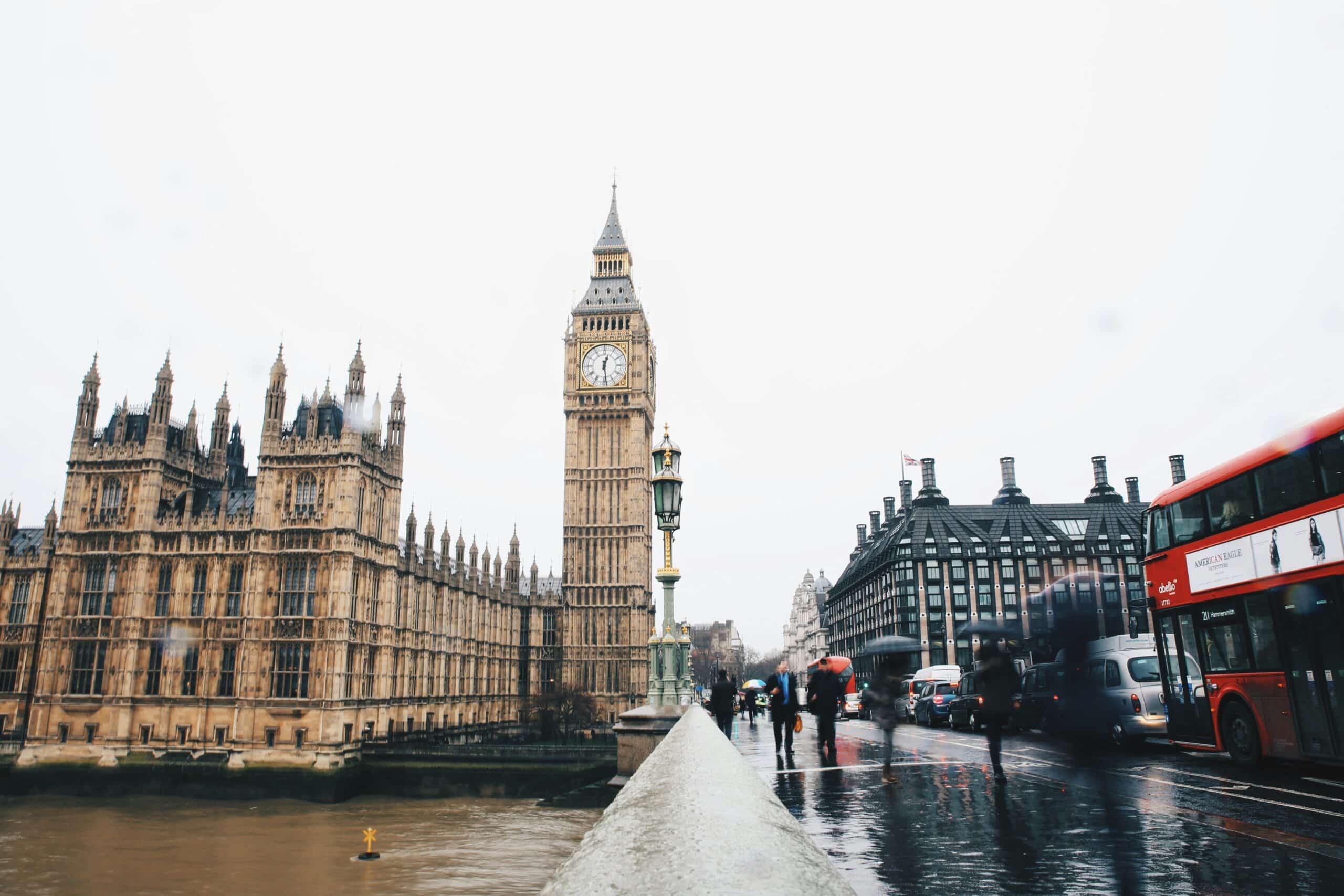
Britain has entered a new era of even higher taxation
Sixteen months ago, Labour walked into Downing Street on a platform of “no major tax rises” and an £8.5bn package of revenue measures. Today, the picture is unrecognisable. Across just two Budgets, the Chancellor has now imposed £70bn of tax rises.
What was framed as “temporary and measured” has become a structural tax shift that hits working people, investors, entrepreneurs and property owners across the board.
What remains is a structural shift: Britain is now a high-tax, low-incentive economy, and working people are footing the bill in an attempt to keep Labour’s backbench benefits supporters on side, for now.
All figures used in this article are from Office for Budget Responsibility forecasts. Yes, that’s the OBR that leaked the entire Budget an hour early; with market-sensitive information available for all to see before even Labour’s own MPs knew its full contents.
The levels and bases of taxation, and reliefs from taxation, can change at any time. The value of any tax relief depends on individual circumstances.
A tax system ratcheting up every year until 2031
Perhaps the most consequential move is the extension of the Income Tax and National Insurance threshold freeze to 2030-31 – a full three years beyond what had been planned previously. While welfare payments have been index linked, working people will now suffer a decade of stealth tax, extracting £66.6bn a year from taxpayers by 2030-31. Despite manifesto pledges not to raise “taxes on working people”, the reality is a sweeping stealth raid on the financially productive.
Key impacts:
- 920,000 more people dragged into the higher-rate 40% band above £50,270
- 780,000 more low earners pulled into paying income tax above the personal allowance of £12,570
- 8.7 million higher-rate taxpayers by decade-end (almost double the 4.4m when the freeze began in 2021-22)
- Those earning £50,000 will be £1,500 worse off
- Someone earning £100,000 will be over £4,000 worse off
Different rates and thresholds of Income Tax apply to Scottish residents.
Planning as a couple: Make full use of both partners’ allowances and tax bands where possible by thoughtfully allocating income-producing assets. If assets are transferred, this must be on an outright and unconditional basis.
Boosting pension contributions: A direct way to bring taxable income down while strengthening long-term retirement resilience.
Strategic charitable giving: Well-planned donations can meaningfully reduce your tax burden while backing the causes that matter most to you.
Reassess work commitments: As galling as it is that hard work no longer pays off; a couple might decide to reduce working hours between them, so as to keep their respective incomes just below a threshold and devote more of their time elsewhere.
The value of an investment with St. James’s Place will be directly linked to the performance of the funds you select and the value can therefore go down as well as up. You may get back less than you invested.
The levels and bases of taxation, and reliefs from taxation, can change at any time. The value of any tax relief depends on individual circumstances.
A direct hit on pensions and long-term investment
The Budget strikes at one of the last major tax advantages available to professionals: salary-sacrifice pension saving.
From April 2029, salary-sacrifice contributions above £2,000 lose their National Insurance exemption:
- Employee NI: 8% up to £50,270 and 2% above £50,270)
- Employer NI: 15%
Real-world example:
One earning £120,000 and making pension contributions of £20,000 via salary sacrifice, will now face an additional National Insurance bill of 2% on the amount of £18,000 above the £2k cap; equivalent to £360 a year.
The measure raises £4.7bn in 2029-30 and £2.6bn in 2030-31, but at the cost of undermining long-term saving behaviour and pushing more households back into punitive tax thresholds.
Spouse/partner strategy: Balance income and assets between partners to leverage joint tax efficiency.
Diversify investment wrappers: Consider using ISAs and other vehicles, alongside pensions where their tax efficiency begins to diminish.
Maximise employer benefits: Ensure you contribute enough to qualify for full employer pension matching and confirm whether NI savings are passed on.
Review thresholds: If targeting income limits (e.g. £100,000), explore alternatives to salary sacrifice for reducing taxable income. Net pay arrangements, and making your own contributions to a private pension, are not exempt from National Insurance.
Tax relief on pension contributions above the basic rate of 20% must be claimed separately via your annual tax return.
The value of an investment with St. James’s Place will be directly linked to the performance of the funds you select and the value can therefore go down as well as up. You may get back less than you invested.
The levels and bases of taxation, and reliefs from taxation, can change at any time. The value of any tax relief depends on individual circumstances.
Wealth and savings hit hard: ISAs, dividends and property income
In a further blow to savers, the Cash ISA allowance for under-65s is to be slashed by 40%. A significant £8,000 portion of one’s total ISA allowance will be reserved for non-cash investments only.
This poses a significant threat to one’s ability to accumulate cash savings, including emergency funds, in a tax-efficient manner.
Over-65s will reserve the freedom to use their full £20,000 allowance for cash each year should they choose to.
Please note that Cash ISAs are not available through St. James’s Place.
Dividend tax rates for basic and higher rate taxpayers will rise by 2% as early as April 2026.
- Basic rate moves from 8.75% to 10.75%
- Higher rate increases from 33.75% to 35.75%
- Additional rate remains at 39.35%
The dividend tax allowance remains frozen at a pitiful £500 a year.
Real-world example:
A higher rate taxpayer receiving a dividend of £20,000 will see it eroded by £6,971.25; nearly £400 more than previously.
Meanwhile, in a double blow to cash savers, Labour has now created a two-tier income tax system. From April 2027, savings income is to be taxed at a hiked rate of 47% for additional rate taxpayers; meanwhile higher rate taxpayers face a rate of 42%, and basic rate taxpayers will pay 22%.
Real-world example:
An additional rate taxpayer earning 4% annual interest on £50,000 in cash (a £2,000 gross return) currently pays £900 in tax; this will rise to £940.
Spouse/partner strategy: Utilise a total of £24,000 a year available as Cash ISA allowances between two people. Make use of both dividend tax allowances totalling £1,000 a year.
Furthermore, where at least one partner earns less than £125,140, capitalise on savings income allowances of £1,000 a year for basic rate taxpayers and £500 a year for higher rate taxpayers. There is no savings income allowance for additional rate taxpayers.
Diversify savings wrappers: Consider using NS&I premium bonds up to £50,000 on which returns are tax-free.
Investors seeking lower-risk, tax-efficient options might use a Stocks & Shares ISA to access conservative strategies such as cash funds.
Another route is through fixed income assets (gilts and qualifying corporate bonds) which can deliver tax-efficient outcomes even when held outside a wrapper. While the income remains taxable, any capital gains are free from CGT. This makes lower-yielding bonds that generate most of their return through price movement an appealing, lower-risk alternative to traditional cash ISAs.
Consider crystallising chargeable events on onshore or offshore bonds before April 2027, allowing any gains to be taxed under the current, lower savings rates.
The value of an investment with St. James’s Place will be directly linked to the performance of the funds you select and the value can therefore go down as well as up. You may get back less than you invested.
The levels and bases of taxation, and reliefs from taxation, can change at any time. The value of any tax relief depends on individual circumstances.
Please note that Cash ISAs are not available through St. James’s Place.
With thresholds frozen until 2031 and tax rises on savings, property, and dividend income, before then, proactive planning with a wealth adviser is essential.
Schedule a callProperty owners and investors hit with two critical tax whacks
Landlords have been targeted yet again, with another two-tier example in property income tax facing newly hiked rates:
- Basic rate: 22%
- Higher rate: 42%
- Additional rate: 47%
Real-world example:
A landlord earning £50,000 a year in rental income from a single, modest property will face a tax bill £1,000 a year higher than before. Multi-property portfolio landlords could see many times that eroded from their already constricted earnings; putting yet more pressure on rental market prices.
In this de facto ‘mansion’ tax; annual, unavoidable, and index-linked via valuation banding; owners of properties worth more than £2m face a new surcharge on their council tax bills.
Landlords themselves will face this cost as the owner of the property, as opposed to council tax paying tenants footing the bill.
| Property value | Annual surcharge |
| £2m – £2.5m | £2,500 |
| £2.5m – £3.5m | £3,500 |
| £3.5m – £5m | £5,000 |
| £5m+ | £7,500 |
The measure will disproportionately hit London and the South East, and will become a long-term cost baked into ownership.
An estimated 145,000 properties will fall within scope. For many owners, securing the liquidity to meet the charge could prove difficult – particularly where the asset is a primary residence rather than a rental property.
Accurate property valuations are crucial, particularly for assets near the threshold, taking into account factors that could raise or lower their value.
As the charge targets owners rather than occupiers, renting rather than purchasing a property may be a more attractive option.
Downsizing to a lower-valued property could reduce or even eliminate the liability.
Properties in Wales and Scotland currently appear exempt, which may present opportunities for those near the border. This may change in future Budgets by these devolved regions.
Consider the optimum location of high-value properties; holding a larger home abroad and a cheaper UK property if you still need a base, may be advantageous.
Splitting ownership between multiple individuals or entities could provide planning benefits. Converting a single property into multiple smaller units may also be worth exploring.
Individuals may want to review the structure through which they hold their properties and assess whether it remains appropriate.
Improving tax efficiency in other areas could free up liquidity to meet this charge.
The levels and bases of taxation, and reliefs from taxation, can change at any time. The value of any tax relief depends on individual circumstances.
Stealth Inheritance Tax (IHT) as it is frozen for even longer
The Chancellor has extended the freeze on IHT thresholds until 2030-31. This could bring in as much as £14 billion or more for the Treasury over the period.
Nil-rate band of £325,000 per person.
Residence nil-rate band of £175,000 per person, when passing main residence to direct descendants (tapered where overall value of estate exceeds £2m).
Individuals holding business assets, working farms, or qualifying AIM shares could, for the first time, become liable for IHT on these holdings. For example, a business owner with a £10 million shareholding could see their IHT liability rise from zero under current rules to £1.8 million from April 2026.
It’s important to note that previously announced reforms will mean pensions become subject to IHT from April 2027.
Lifetime gifting; including making immediately exempt gifts from surplus income, provided it does not affect your standard of living; remains an effective way to reduce the value of your estate for IHT purposes.
Writing a Life Cover Plan into Trust may calculate to be a prudent solution to help meet an eventual IHT liability.
Placing qualifying agricultural or business property into a trust before April 2026 can currently be done without an IHT entry charge. From April 2026, only the first £1 million will be exempt if the settlor dies within seven years, with any excess subject to an entry charge. For business owners planning an exit and wishing to allocate shares into a trust as part of their succession strategy, there is still a limited window to transfer larger holdings without an upfront charge.
For full details, explore The Inheritance Tax Escape Route.
The levels and bases of taxation, and reliefs from taxation, can change at any time. The value of any tax relief depends on individual circumstances.
Trusts are not regulated by the Financial Conduct Authority.
Business owners and entrepreneurs see investment incentives cut
- Writing Down Allowances cut 18% to 14% from April 2026
- New 40% first-year allowance from January 2026
- Dividend taxation up 2% from April 2026
- Property income taxation up 2% from April 2027
- EV road-pricing introduced at 3p per mile from April 2028
- National Insurance thresholds held longer
Companies face higher friction across remuneration, capital allocation and investment planning just as borrowing costs tighten.
The levels and bases of taxation, and reliefs from taxation, can change at any time. The value of any tax relief depends on individual circumstances.
Yet more Capital Gains Tax hikes
From 26 November 2025, CGT relief on qualifying disposals to Employee Ownership Trusts (EOTs) is reduced from 100% to 50% of the gain.
This change materially affects the net proceeds for business owners considering an EOT exit, with the effective tax rate rising from zero to 12% on the full gain. While employee ownership remains supported, the reduced financial incentive for vendors requires a reassessment of business valuations and personal financial planning strategies.
The levels and bases of taxation, and reliefs from taxation, can change at any time. The value of any tax relief depends on individual circumstances.
Other announcements
VCT investments will see a reduction in upfront income tax relief but continue to offer tax-free dividends – a valuable income stream for many investors – alongside exemption from capital gains tax.
Qualifying EIS investments retain 30% upfront income tax relief, as well as inheritance and capital gains advantages.
As a UK Private Capital (formerly BVCA) member firm, Apollo is concerned by this reduction in income tax reliefs, which could lead to a decline in fundraising potentially impacting high growth investments that the government says it seeks to encourage.

Currently, distributions or dividends from “post-departure trade profits” (profits accruing to a company after an individual leaves the UK, calculated on a just and reasonable basis) are not subject to UK tax. From 6 April 2026, these profits will fall within the scope of the temporary non-resident rules, meaning dividends received while non-UK resident will become taxable in the UK.
Excluded Property Trusts set up before 30 October 2024 will benefit from a £5 million cap on periodic and exit charges, with the cap applied retrospectively from 6 April 2025.
In a rare moment of reversal, the Chancellor abandoned elements of her controversial “family farm tax” overhaul.
In the 2024 Budget a limit of £1million was introduced for agricultural property relief and business property relief, causing anger among farmers and businesses.
However, in the 2025 Budget Reeves confirmed this £1 million relief could now be transferred between spouses and civil partners if unused on first death. This means one half of a couple could now benefit from relief of £2 million.
The levels and bases of taxation, and reliefs from taxation, can change at any time. The value of any tax relief depends on individual circumstances.
Has anything been spared tax increases?
- Pension income tax relief untouched
- 25% tax-free cash cap untouched at £268,275
- Stocks & Shares ISA allowance remains £20,000
- Capital gains tax rates unchanged
- Gifting rules and inheritance tax rates unchanged
- Salary sacrifice NI cap only applies to pensions; and not to EV schemes etc.
As a UK Private Capital (formerly BVCA) member firm, Apollo is pleased that the government have not introduced a new tax charge on partnerships. The LLP model is an important component of the UK’s competitive advantage as a global destination for business.
The levels and bases of taxation, and reliefs from taxation, can change at any time. The value of any tax relief depends on individual circumstances.
Future outlook and planning
The bottom line is that this Budget deepens the tax burden on earned income, property, investment and retirement.
Whether you’re earning, investing, building a business or holding property, this Budget materially changes your 10-year outlook.
Key moves now matter more than ever:
- Restructure your pension approach before 2029
- Overhaul your estate planning to mitigate soaring IHT liabilities
- Model net property income at the new 22/42/47% tax rates
- Plan for increased dividend taxation
- Factor in the high-value property surcharge to long-term ownership costs
- Rebalance portfolios in light of reduced VCT relief
- Prioritise tax-efficient wrappers before further erosion; take advantage of allowances while they still exist
- Stress-test overall net income under extended fiscal drag
- Review succession planning given the new farming inheritance rules (and possible future changes elsewhere)
- Protect wealth from both fiscal drag and market uncertainty.
This is not episodic tinkering – it’s a structural reset. And for affluent households, the difference between reacting and planning will be measured in five- and six-figure outcomes.
For higher earners, senior executives, contractors, company directors and entrepreneurs, this Budget isn’t something to simply read and move on from. It reshapes the wealth landscape for the rest of the decade.
If your financial life touches pay, pensions, property, investments, or business ownership, now is the moment to re-plan.
The value of an investment with St. James’s Place will be directly linked to the performance of the funds you select and the value can therefore go down as well as up. You may get back less than you invested.
The levels and bases of taxation, and reliefs from taxation, can change at any time. The value of any tax relief depends on individual circumstances.
Still have questions?
Following the biggest set of tax increases in modern history, it’s an opportune moment to evaluate your family’s financial situation and objectives.
We encourage you to contact us, to ensure you are fully utilising all available allowances this year, and that you are adequately protected from risk, as far as possible, including any risk resulting from these changes.
Obtain support from an expert financial planner.
Create Your Bespoke PlanUK economic picture
Welfare expansion and rising long-term fiscal risk
- Welfare costs expected to exceed £400bn within a few years
- Two-child cap scrapped: £3bn a year
- Disability/PIP spending rising sharply
- Higher-than-expected unemployment inflating welfare budgets
- Revised asylum accommodation costs: £15.2bn (up from £4.5bn)
- National debt heading to 96% of GDP
Fiscal space is evaporating just as taxation rises to historic highs.
The OBR flags acute risk exposure. A 35% global equity correction (AI bubble burst scenario) could blow £26bn out of the UK’s fiscal position. A more modest 15% market drop would still cut GDP by 0.6% by 2028.
Losses on the Bank of England’s QE programme now forecast to reach £164bn by 2036 – up £30bn from March’s estimate.
Meanwhile, the housing market is stagnating, retail is cooling sharply, and the country is already witnessing outward migration of higher earners and business owners.
SJP Approved 05/12/2025

Should you require more information or have particular questions, we invite you to contact us at your convenience.
Contact Us
Nauman Gondal
Chief Executive Officer

